Signs Your Wheelchair or Mobility Scooter Needs Repair
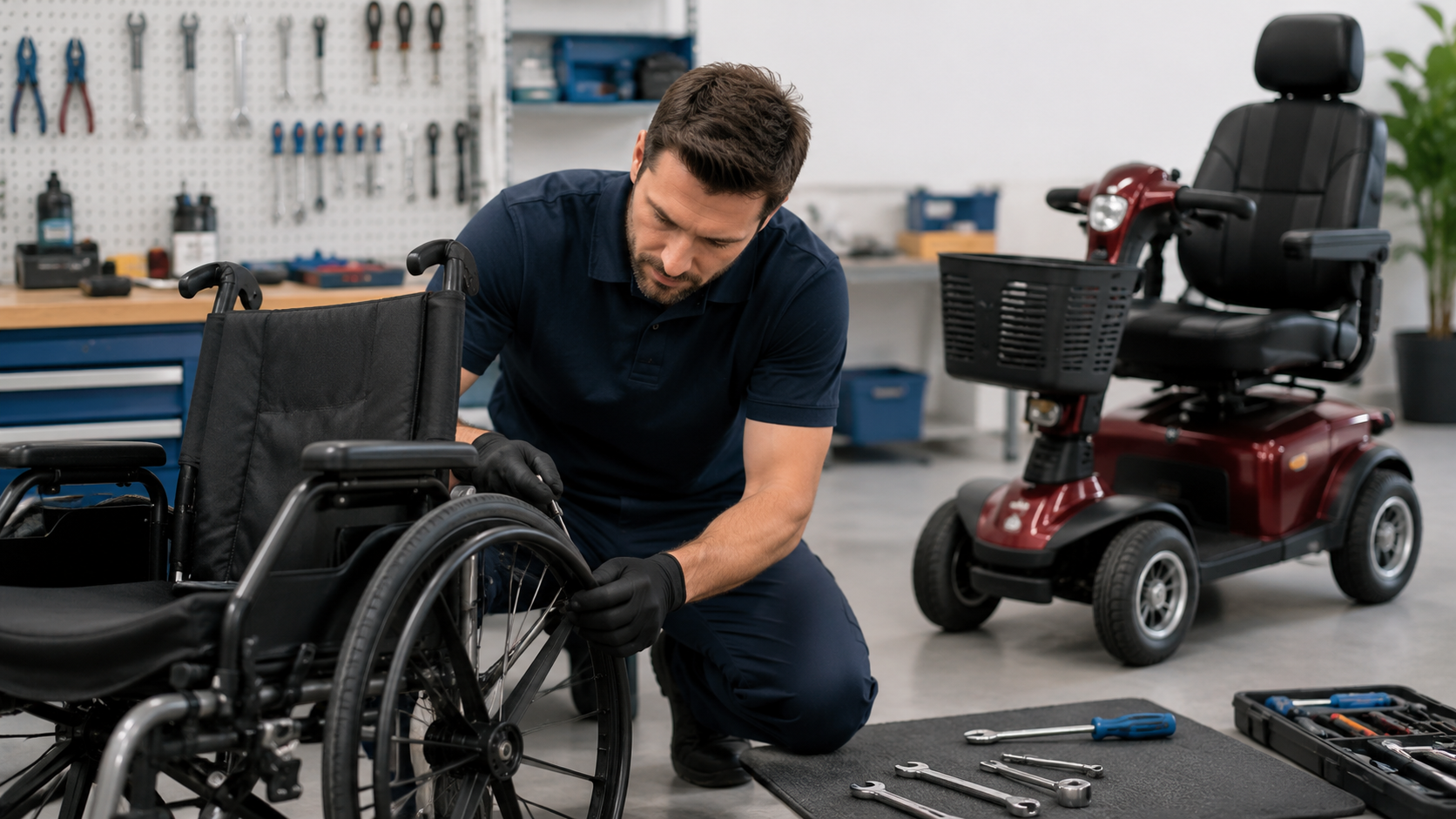
Wheelchairs and mobility scooters provide essential support for people who depend on them for everyday movement. When these devices begin to wear down or malfunction, even a small issue can affect safety, comfort, and independence.
Some equipment problems develop slowly and may be easy to overlook. A weak battery, loose wheel, worn brake, or unusual sound may not seem urgent at first, but it can become a larger and more expensive repair if left untreated.
Recognizing the early warning signs can help users schedule service before the equipment stops working completely. Below are common signs that a manual wheelchair, power wheelchair, or mobility scooter may need inspection, maintenance, or repair.
The Equipment Is Becoming Harder to Move
A manual wheelchair should roll smoothly without requiring excessive force. When it becomes difficult to push, there may be a problem with the tires, wheels, bearings, casters, brakes, or frame alignment.
Possible causes include:
- Low tire pressure
- Worn or damaged tires
- Debris caught in the wheels
- Dry or damaged bearings
- Bent casters
- Brakes rubbing against the wheels
- Loose or misaligned components
A wheelchair that pulls to one side may also have uneven tire pressure, a damaged caster, or a frame alignment issue.
Ignoring this problem can place additional strain on the user or caregiver and may cause uneven wear on other parts.
Brakes Do Not Hold Properly
Wheelchair brakes are an important safety feature, especially during transfers, when sitting down, or when getting out of the chair.
If the brakes feel loose, require extra force, or no longer hold the chair securely, they should be inspected promptly. Brake problems may be caused by worn tires, loose mounting hardware, damaged brake components, or poor adjustment.
A wheelchair should not move when the brakes are properly engaged on a level surface. Users should avoid transferring in or out of a chair when the brakes are unreliable.
Scooters and power wheelchairs also have braking systems that may require professional service when stopping becomes delayed, uneven, or unpredictable.
The Battery Does Not Last as Long
Reduced battery life is one of the most common signs that a power wheelchair or mobility scooter needs service.
A battery that once lasted all day may begin losing power after a short trip. The equipment may move more slowly, stop unexpectedly, or require frequent charging.
Possible causes include:
- Aging batteries
- Incorrect charging habits
- A damaged charger
- Loose electrical connections
- A faulty charging port
- Extreme temperatures
- Electrical system problems
Mobility batteries do not last forever. Their lifespan depends on usage, charging frequency, storage conditions, and the type of battery.
A technician may test the battery and charging system to determine whether replacement is necessary.
The Battery Will Not Charge
When a scooter or power chair does not charge, the battery may not be the only problem.
The issue could involve the charger, outlet, charging port, wiring, battery connections, or control system. Check that the outlet is working and that the charger is connected correctly. Avoid using damaged cords or unofficial charging equipment.
When the chair continues to show no charging activity, a professional inspection is recommended.
Repeatedly attempting to operate equipment with a weak or uncharged battery may leave the user stranded away from home.
Unusual Noises During Operation
Squeaking, clicking, grinding, rattling, or knocking sounds should not be ignored.
These noises may indicate:
- Loose hardware
- Worn bearings
- Damaged tires or wheels
- Motor problems
- Suspension issues
- A loose seat or frame component
- Debris caught in moving parts
The location and timing of the sound may help identify the problem. For example, a clicking noise that occurs during turns may involve a wheel or caster, while grinding during acceleration may point to a motor or drivetrain issue.
Continuing to use the equipment may cause further damage.
The Scooter or Power Chair Moves Slowly
A noticeable loss of speed may be related to a weak battery, motor problem, controller issue, tire pressure, excessive weight, or electrical resistance.
The user may notice that the device struggles on inclines, moves slowly after charging, or no longer responds as quickly to the controls.
Some equipment has adjustable speed settings, so the controls should be checked first. However, sudden or unexplained changes in speed should be evaluated.
A scooter that slows down unexpectedly in traffic areas, parking lots, or on ramps may create a safety risk.
The Chair or Scooter Shakes or Feels Unstable
A mobility device should feel stable during normal use.
Shaking, wobbling, or unusual vibration may indicate loose wheels, worn tires, damaged casters, frame problems, steering issues, or suspension wear.
Users may notice that the equipment feels unstable during turns or on flat surfaces. A loose seat or armrest may also create a sensation of movement.
Do not wait for a wheel or component to fail completely. An inspection can help identify loose or damaged parts before they cause an accident.
Steering Has Become Difficult
Mobility scooters should turn smoothly and respond predictably. Power wheelchairs should move in the intended direction when the joystick is operated.
Steering problems may include:
- Pulling to one side
- Delayed response
- Sudden turning
- A stiff tiller
- Loose handlebars
- Joystick drift
- Difficulty moving in a straight line
These problems may be caused by tire wear, alignment, damaged controls, loose steering components, or electrical issues.
A drifting power wheelchair can be particularly dangerous in narrow spaces, near stairs, or around traffic.
The Controls Are Not Responding Correctly
Power wheelchair and scooter controls should respond consistently.
Warning signs include:
- The joystick does not respond
- The device moves after a delay
- Buttons stop working
- Error codes appear
- The display flashes
- Speed changes unexpectedly
- The equipment shuts off during use
Control problems should be handled carefully because they may affect the user’s ability to stop or change direction.
Turn off the device and seek service when the controls behave unpredictably.
Tires Are Worn, Cracked, or Flat
Tires affect traction, comfort, steering, and braking.
Inspect tires regularly for:
- Cracks
- Flat areas
- Low pressure
- Uneven wear
- Cuts
- Missing tread
- Loose wheel hardware
Pneumatic tires may require air, while solid tires may still wear or crack over time. Damaged tires can make the equipment harder to control and may place stress on the wheels and frame.
Footrests, Armrests, or Seating Feel Loose
Loose seating components can affect posture, comfort, and safe transfers.
Footrests may swing unexpectedly, armrests may move during transfers, and seats may shift while the equipment is in motion. Damaged upholstery or cushioning may also create pressure and discomfort.
Hardware may loosen with daily use, transportation, or repeated folding. These components should be tightened, adjusted, or replaced when necessary.
The User Is Experiencing New Discomfort
Pain or discomfort does not always mean the wheelchair itself is broken, but it may indicate that the equipment needs adjustment.
Warning signs include:
- New back or shoulder pain
- Pressure areas
- Numbness
- Poor posture
- Sliding forward
- Difficulty reaching the controls
- Feet not resting properly
- Leaning to one side
The user’s physical condition may change over time, and a chair that once fit correctly may no longer provide suitable support.
Custom wheelchair adjustments or seating changes may improve comfort and positioning.
Error Codes or Warning Lights Appear
Modern power wheelchairs and scooters may display error codes or flashing lights when a problem is detected.
The meaning of the code depends on the manufacturer and model. It may indicate a battery issue, motor problem, controller fault, brake concern, or electrical connection error.
Do not repeatedly reset the equipment without identifying the cause. Record the code and provide it to the repair technician along with the equipment model and serial number.
The Equipment Has Been Dropped or Damaged
Wheelchairs and scooters should be inspected after an accident, impact, fall, or transportation damage.
Even when the equipment appears normal, the frame, wiring, controls, wheels, or seating system may have been affected.
An inspection is especially important when the device was involved in a vehicle accident, fell from a ramp, tipped over, or was improperly secured during transportation.
Why Early Repairs Matter
Timely repairs can help:
- Protect the user from falls and injury
- Prevent the equipment from stopping unexpectedly
- Reduce strain on caregivers
- Avoid damage to additional components
- Extend the life of the device
- Maintain comfort and independence
Regular maintenance is often more convenient and affordable than waiting for a complete breakdown.
A wheelchair or mobility scooter should operate smoothly, respond correctly, and feel stable and comfortable. Changes in speed, battery life, braking, steering, sound, or seating should be taken seriously.
ACI Systems, Inc. provides repair and maintenance services for manual wheelchairs, power chairs, mobility scooters, hospital beds, air mattresses, and other medical equipment. Our team can inspect the equipment, identify the problem, and recommend suitable repair or replacement options based on the model and condition.